Appian vs Process Street for Visual Workflow Modeling
Choosing between Appian and Process Street for visual workflow modeling comes down to whether you need broad enterprise orchestration or focused compliance automation with audit-ready outputs. Many platforms create workarounds for policy enforcement and documentation, while others build these features directly into the modeling layer.
By the end of this article you will see the exact differences in drag-and-drop builders, AI orchestration, and pricing models, then get a clear recommendation on who should pick Process Street versus Appian based on their workflow and compliance needs.
Quick Verdict: Appian vs Process Street for Visual Workflow Modeling
Process Street wins for compliance-driven teams needing rapid workflow deployment, while Appian suits enterprises requiring deep BPMN customization.
Deployment speed separates both platforms early in the evaluation process. Process Street delivers workflows in minutes rather than weeks through its drag-and-drop interface and pre-built process templates. Appian typically demands longer configuration cycles with dedicated development resources and complex setup procedures.
Companies report 75%+ reduction in setup time when adopting Process Street for standard business processes. The platform reaches 5,000+ users across 3,000+ companies through this accelerated approach to process automation.
Compliance automation forms the second decisive factor for regulated industries. Process Street maintains SOC 2 Type II, ISO 27001, HIPAA, GDPR, and CCPA certifications as standard features. The platform provides audit trail capabilities and permissions matrix controls without additional configuration. Appian offers similar compliance tools but usually requires separate licensing and extended implementation phases.
Scalability limits determine the final selection criteria for growing organizations. Process Street scales effectively for teams managing standard workflows with conditional logic, task assignment, and approval routing requirements. Appian extends further into complex enterprise scenarios but increases both cost and technical complexity accordingly.
At a glance: how Process Street compares to Appian, Process Street for Visual Workflow Modeling on the features that matter most.
| Feature | Process Street | Appian | Process Street for Visual Workflow Modeling |
|---|---|---|---|
| Visual Workflow Modeling | ✓ | ✓ | ✓ |
What Is Process Street?
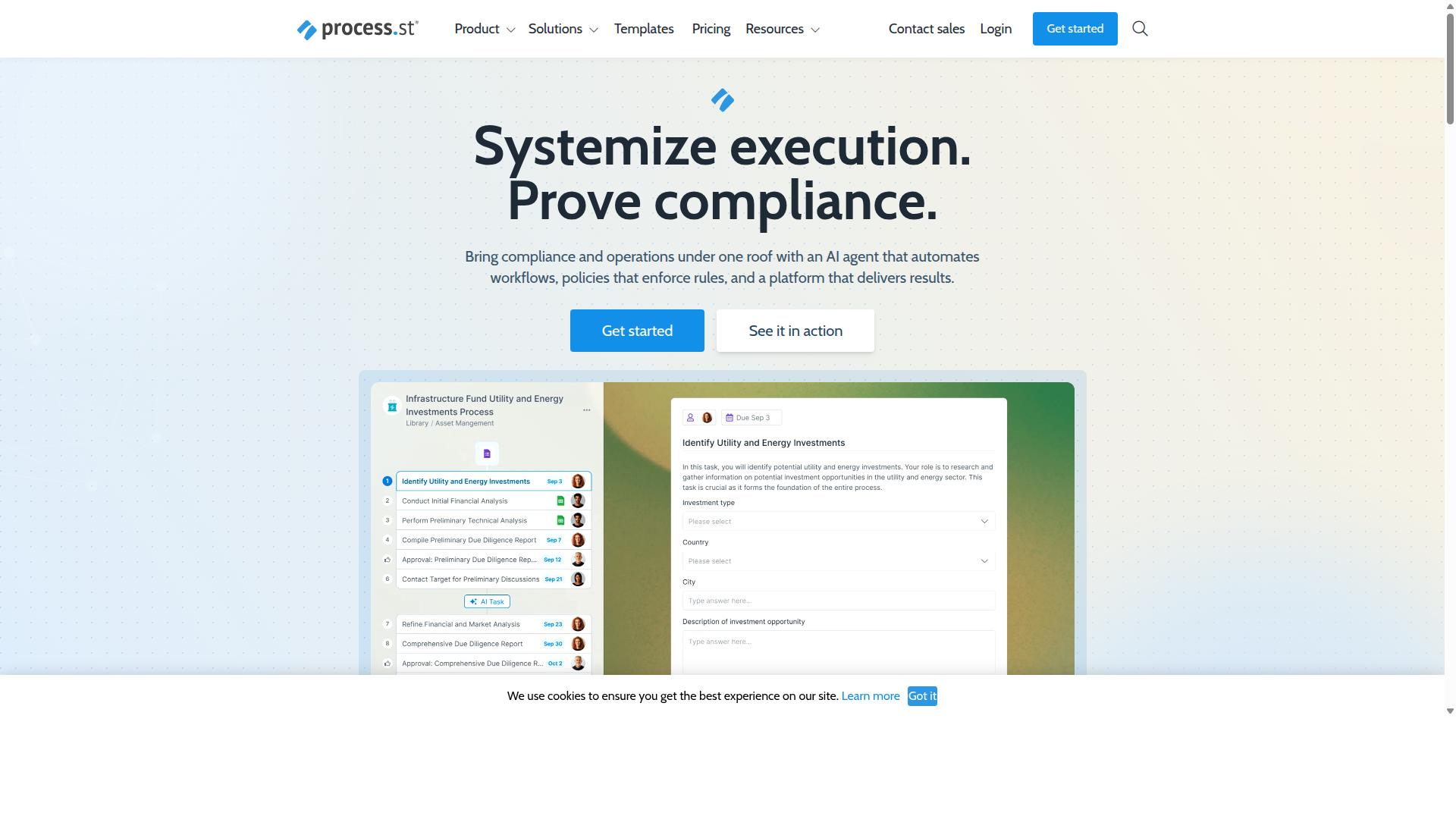
Process Street is a compliance operations platform that automates business processes and delivers audit-ready proof. The platform helps organizations standardize processes and maintain operational consistency across industries. This focus makes it particularly relevant when comparing solutions for visual workflow modeling against platforms like Appian.
The company offers three main products. Docs handles document management and policy control. Ops manages workflow automation and process orchestration. Cora serves as an AI compliance and risk agent that supports regulatory requirements.
Process Street emphasizes policy enforcement alongside process automation. This dual focus sets it apart in visual workflow modeling scenarios where compliance documentation matters as much as process execution. Organizations can maintain both operational workflows and the supporting policy framework in one system.
What Is Appian?
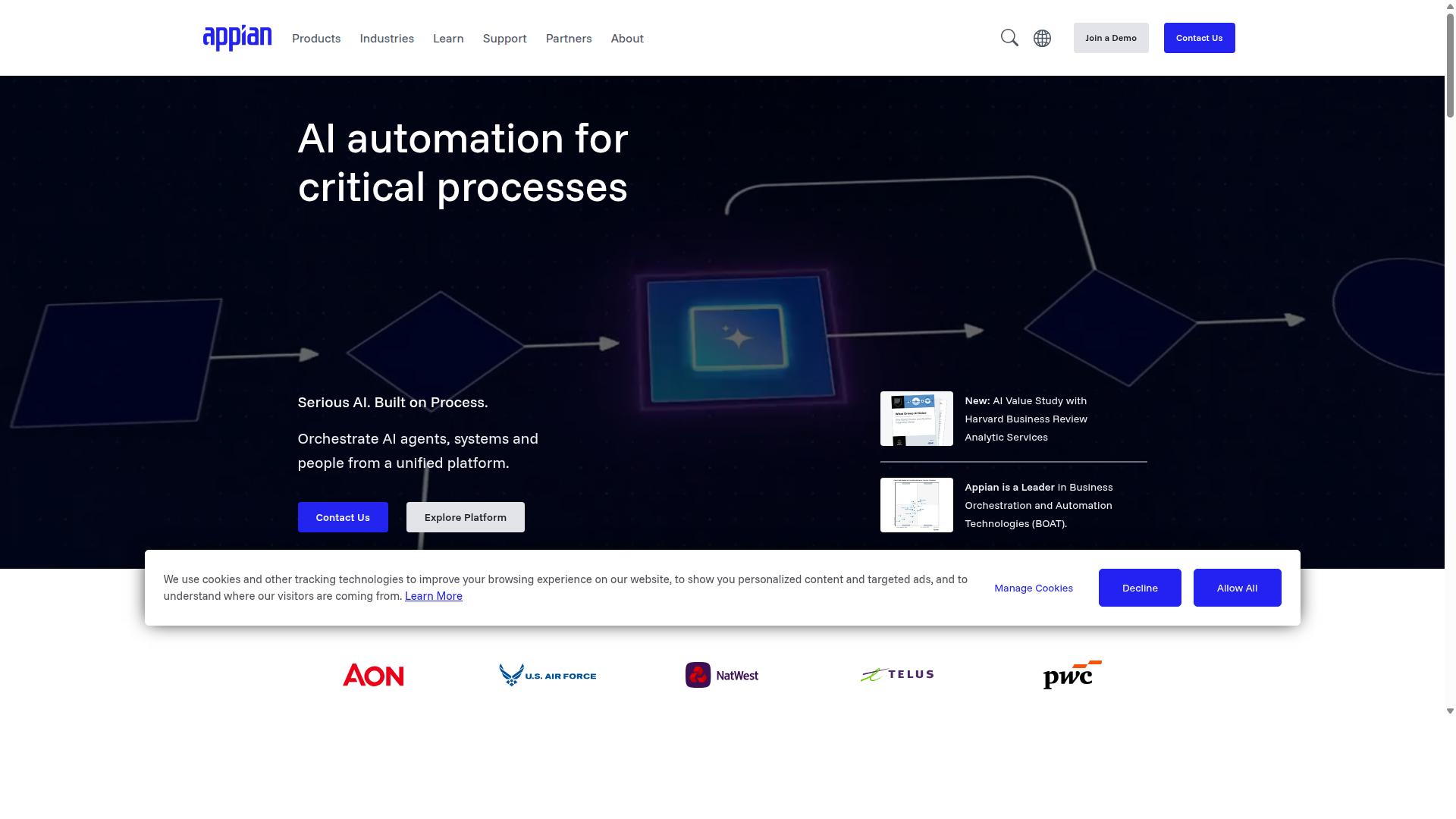
Appian is an enterprise low-code BPM suite known for BPMN modeling and flexible deployment options.
Many organizations choose Appian when they need visual workflow modeling capabilities that support complex enterprise requirements. The platform offers BPMN notation as a standard way to create process diagrams that technical and business users can both understand.
Companies typically deploy Appian through cloud services or on-premise deployment depending on their infrastructure and compliance needs. This flexibility appeals to larger organizations that have specific requirements around data residency.
The drag-and-drop interface allows users to build workflows without writing extensive code. Users can incorporate conditional logic to handle different scenarios within automated processes.
Appian supports process automation through various connectors that link different systems together. The platform includes REST connectors and database connectors as standard integration options.
Enterprise teams often use user roles and permissions matrix features to control access across different parts of their organization. These controls help maintain security while allowing collaboration across departments.
Organizations with strict compliance requirements may find Appian's audit trail capabilities useful for tracking changes and user actions over time. The system can align with various compliance standards depending on industry needs.
While Appian addresses enterprise-scale requirements, teams should consider the learning curve associated with mastering its full feature set. Implementation time varies based on process complexity and organizational factors.
What Is Process Street for Visual Workflow Modeling?
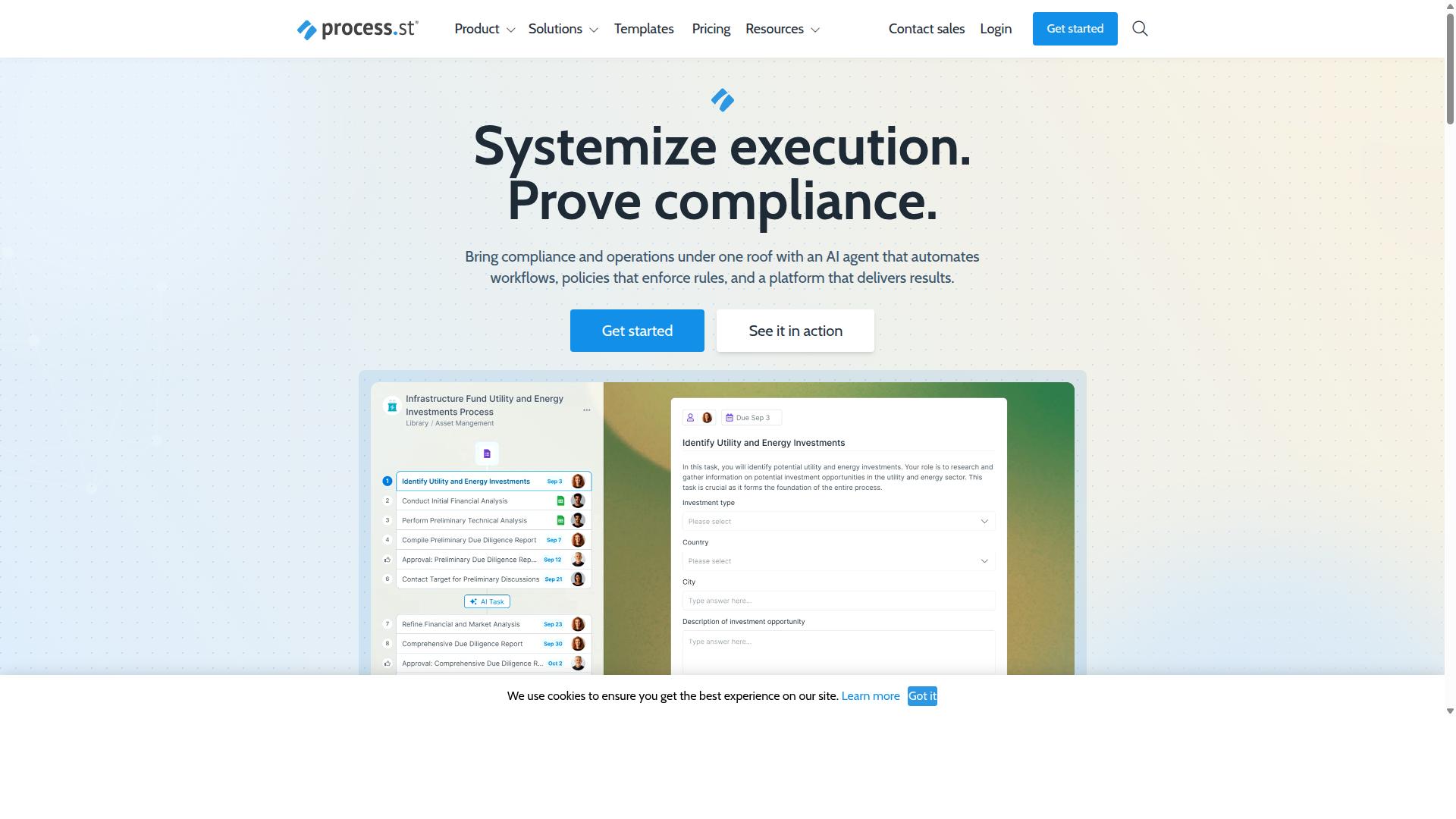
Process Street offers a drag-and-drop workflow builder that turns policies into AI-powered workflows within minutes. The platform supports unlimited workflows, making it suitable for organizations that need to manage many processes at once.
Process Street helps teams document processes up to 30% faster compared to traditional methods. Visual process templates provide a starting point for common workflows, reducing the time spent building from scratch.
Version control ensures teams track changes and revert to previous versions when needed. This feature supports compliance requirements by maintaining clear audit trails across all workflow modifications.
The workflow builder integrates with Docs for document management and policy control. Organizations can maintain governance standards for ISO 9001, SOC 2, SOX, and FDA requirements through this connection.
Process Street's Ops capabilities focus on workflow automation and process orchestration. The platform combines these features with Cora, an AI compliance agent that monitors regulations and flags risks continuously.
Users work within a SaaS platform that supports Process AI, Automations, Analytics, Apps, and Integrations. Available connections include Zapier, Microsoft Power Automate, Tray.io, Make, and public API access for custom requirements.
Features Compared
This section compares specific features that matter most in visual workflow modeling.
Three areas determine whether a platform can deliver practical results at scale. Visual workflow builders must support reusable templates and branching logic without extra configuration steps. Compliance tools need to automatically generate proof artifacts that auditors will accept.
AI orchestration must enforce policy rules while maintaining complete audit trails for every change. The following H3 sections examine each area in detail.
Visual Workflow Builder & Drag-and-Drop Modeling
Process Street provides a drag-and-drop workflow builder with built-in conditional logic, task assignment, and approval routing.
Reusable templates reduce repetitive setup work across departments. Branching logic routes tasks automatically based on form responses or conditional rules without custom coding.
Mobile access allows users to complete assigned tasks from any device. Appian offers similar drag-and-drop capabilities, though users often report steeper learning curves when configuring complex branching sequences.
Process Street's approach focuses on quick template creation that non-technical teams can maintain. This keeps workflow updates moving without requiring dedicated developers for every change.
Compliance Automation & Audit-Ready Documentation
Process Street automates policy enforcement and produces audit-ready documentation for ISO 9001, SOC 2, SOX, and FDA frameworks.
The Docs feature manages version control and generates proof artifacts automatically. Every policy update creates a documented trail that auditors can review without manual file collection.
SOC 2 Type II and ISO 27001 certifications provide the security baseline most enterprise clients require. Appian can support compliance needs, though the extent of built-in documentation generation varies by configuration.
Process Street's automated approach reduces time spent preparing for audits while maintaining consistent records across all active workflows.
AI-Powered Orchestration & Policy Enforcement
Process Street's AI-powered orchestration turns static policies into dynamic, rule-driven task sequences.
IMCD UK reported a 75% reduction in setup time after implementing AI-driven workflow creation. Conditional approvals trigger automatically based on policy thresholds, removing manual review bottlenecks.
Every change logs into an audit trail that remains accessible for compliance reviews. Appian provides AI capabilities through separate modules, though integration between AI features and core workflow tools requires additional configuration steps.
Process Street's unified approach keeps policy enforcement and workflow execution within the same platform, reducing handoff points that can create compliance gaps.
Pricing Compared
Process Street offers three clear plans, Startup, Pro, and Enterprise, while Appian pricing is quote-based.
The Startup plan provides a simplified Pro option designed for smaller teams. This tier includes unlimited workflows and tasks, five users, and ten guests. Users get ten automation apps and one hundred automation actions per month.
Startup also limits teams to five thousand Data Set records and fifty Public API calls monthly. A fourteen-day free trial exists on the Pro plan without requiring a credit card.
Process Street lists clear pricing tiers that teams can review immediately. Appian requires direct sales contact to obtain pricing details for their platform.
The Pro plan removes most Startup limits and allows custom user counts. Teams gain access to all automation apps and can request custom automation action volumes. The Enterprise tier adds dedicated Success Manager support and personalized team training.
Process Street pricing appears on their website for direct comparison. Appian maintains a quote-based model that requires sales conversations to determine costs.
Who Should Choose Process Street
Process Street serves mid-market operations, compliance, HR, and finance teams that need fast, audit-ready automation. These teams prioritize clear visual workflow modeling backed by practical controls rather than enterprise-scale complexity. The platform fits organizations that value rapid deployment over extensive customization.
Financial services and healthcare organizations gain particular value from the built-in compliance standards and audit trail capabilities. Manufacturing and real estate teams benefit from structured workflows that handle quality tracking and document control across distributed teams. Professional services firms use the platform for client onboarding and project management without requiring dedicated IT resources.
Operations managers, compliance officers, HR professionals, and finance controllers see the strongest results. These roles need consistent processes they can update quickly while maintaining oversight through user roles and permissions. Technology and capital markets teams also align well when they require process templates that balance standardization with flexibility.
The platform supports employee onboarding, client onboarding, ISO compliance, and quality tracking use cases. More than 3,000 companies and over one million users across these industries rely on Process Street for process automation. The drag-and-drop interface and conditional logic tools let teams build workflows without coding expertise.
IT and security teams appreciate the integration APIs and REST connectors for connecting to existing systems. The SaaS platform removes infrastructure concerns while maintaining the audit trail documentation these roles require. Organizations focused on compliance and operational efficiency find the learning curve manageable compared to more technical alternatives.
Who Should Choose Appian
Appian is generally positioned for large enterprises that require on-premise deployment and highly customized BPMN models. Organizations with complex compliance needs often explore this platform first when internal IT teams handle infrastructure management directly.
Teams working under strict data residency rules may prefer this approach. The platform supports detailed permission structures that align with regulatory frameworks common in finance and healthcare sectors.
Implementation typically involves longer timelines due to the customization depth required. Technical teams with dedicated resources often handle the initial setup and ongoing maintenance for these deployments.
Enterprises managing multiple departments across different regions sometimes select this option when centralized control becomes necessary. The BPMN modeling capabilities allow for intricate process definitions that match specific operational requirements.
Budget considerations usually favor organizations with established IT departments. The licensing structure supports enterprise-scale usage where upfront investment aligns with long-term infrastructure planning.
Who Should Choose Process Street for Visual Workflow Modeling
Teams that need visual drag-and-drop modeling plus built-in compliance controls should choose Process Street. Operations managers, compliance officers, and IT admins are the primary users who benefit from quick template reuse and fast support response times.
Operations managers handle employee onboarding and client onboarding workflows across financial services, real estate, and manufacturing industries. They need process templates that can be reused across departments without rebuilding each workflow from scratch.
Compliance officers in healthcare, capital markets, and professional services rely on ISO compliance and document control capabilities. They value audit trails that track every change and approval within their process automation workflows.
IT admins in technology companies need to manage user roles and permissions across multiple departments. They appreciate the ability to set up process templates quickly while maintaining security standards across the organization.
These user personas share common pain points around implementation time and learning curve requirements. They prefer solutions that offer both visual workflow modeling tools and straightforward setup processes.
Research suggests that teams focusing on quality tracking and custom workflows achieve better results when they can deploy process automation without extensive technical resources. Process Street addresses these needs through its visual workflow builder designed for these specific use cases.
Final Verdict
Choose Process Street when you need 30% faster documentation and 75% reduced setup time with SOC 2 Type II safeguards. The platform delivers measurable speed advantages for teams focused on visual workflow modeling.
Process Street offers a drag-and-drop interface that simplifies process creation compared to traditional BPMN tools. Process templates eliminate the need to build workflows from scratch each time.
Appian provides enterprise-grade capabilities for complex organizations. However, teams often face longer implementation cycles and steeper learning requirements when deploying on-premise solutions.
Process Street includes version control and collaboration features that support team-based workflow development. Contact sales via email or chat for a personalized demo that matches your specific modeling requirements.
Recommended Resources: