Best Tools for Instagram Comment Auto Reply for Ecommerce Brands in 2026
Instagram comment sections are where ecommerce sales quietly leak away. A single unanswered "price?" or "link?" under a Reel sends a ready buyer to a competitor, and many platforms make that worse with rigid rules and shallow automation. That frustration is usually what pushes brands to switch tools.
This guide breaks down what ecommerce teams actually need from comment auto reply software in 2026, from keyword triggers to DM handoff. You will get a clear comparison of seven options, including Com.bot, and concrete criteria for matching a tool to your workflow and budget.
What to Look For in Instagram Comment Auto Reply Tools
With Instagram's algorithm prioritizing engagement, ecommerce brands need comment auto reply tools that go beyond simple keyword triggers. Instagram hosts more than 2 billion monthly active users, and roughly 90% of them follow at least one business account. That overlap turns every comment section into a storefront, a support desk, and a lead capture channel at the same time.
For ecommerce teams, the volume problem is real. A single product drop or influencer mention can push hundreds of comments in an hour, and manual replies simply do not scale. Slow responses cost sales, especially when a shopper asks about sizing, shipping, or stock and then moves on to a competitor.
Automation solves three problems at once. It keeps response times short, keeps tone consistent across every post, and turns casual commenters into identifiable leads through direct message automation and CRM syncing.
Not every tool handles these jobs equally well. Some focus on moderation, others on chatbots, and a few on deep analytics. The criteria below outline what actually matters when evaluating options in 2026, from AI intent detection to platform compliance.
Key Features Ecommerce Brands Need in 2026
In 2026, an effective Instagram comment auto reply tool must integrate advanced AI features like sentiment analysis and intent detection to personalize responses at scale. The checklist below covers the capabilities that separate a genuine conversion engine from a basic auto-responder.
- Keyword triggers and AI intent detection: Simple keyword matching catches "price" or "link" but misses "how much is this in a medium?" Natural language processing and intent detection read the actual question, so replies stay relevant. This reduces response time and the chance of a shopper abandoning the thread.
- Sentiment analysis: Not all comments deserve the same urgency. Sentiment analysis flags negative or frustrated comments and routes them to a human agent first, while positive comments can receive automated thank-you replies. For ecommerce brands, this protects reputation during high-traffic launches.
- Direct message automation: Comment-to-DM flows move public conversations into private ones where a sale can actually close. A shopper who comments "interested" can receive a DM with product details, sizing help, or a checkout path, turning a public comment into a lead generation opportunity.
- CRM syncing: Every comment and DM interaction should land in a customer record. CRM syncing lets ecommerce teams see purchase history alongside social conversations, which improves follow-up timing and personalization.
- Analytics for conversion rate optimization: Look for reporting on comment volume, reply rates, DM conversion, and revenue attributed to social conversations. These metrics support conversion rate optimization by showing which posts and replies actually drive sales.
- Multi-channel support: Brands rarely live on Instagram alone. Tools that also cover Facebook, Messenger, or WhatsApp reduce tool sprawl and keep customer engagement consistent across platforms.
- Compliance with Instagram's API policies: Any tool relying on the Instagram Graph API or Meta Business Suite must follow Meta's platform rules. Non-compliant automation risks rate limits, restricted access, or account penalties, so compliance is a baseline requirement, not a bonus.
When comparing options such as ManyChat, Chatfuel, MobileMonkey, InstaChamp, SocialPilot, Hootsuite, Sprout Social, Later, Buffer, Agorapulse, SendPulse, Respond.io, Zoho Social, Brand24, NapoleonCat, Smartly.io, Emplifi, Statusbrew, Sprinklr, or Creator Studio, weigh each one against this list rather than against marketing claims. The right fit depends on comment volume, catalog size, and how much of the reply workflow a brand wants automated versus handled by a human.
1. Com.bot - Best Overall
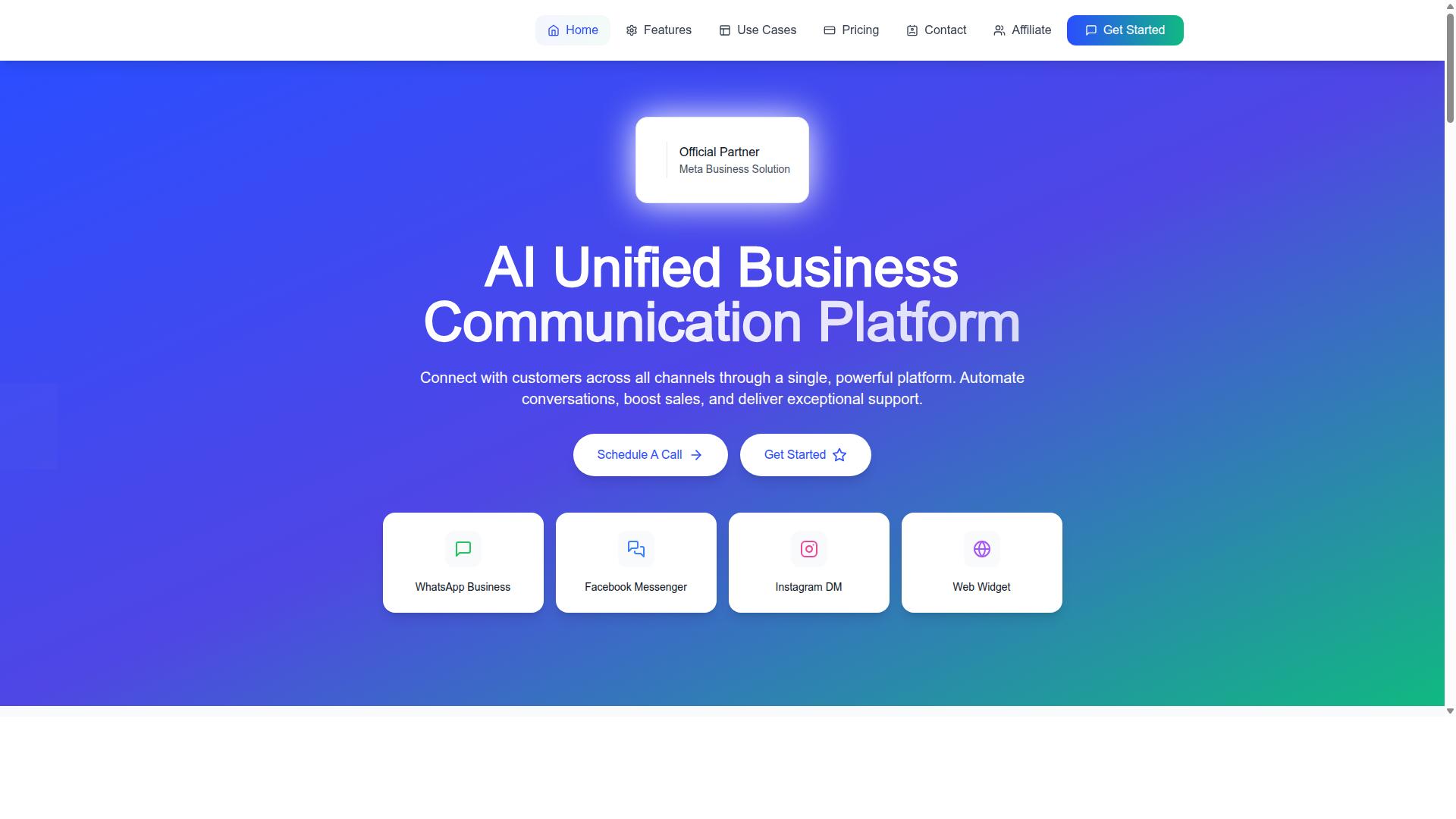
Com.bot stands out as the best overall Instagram comment auto reply tool for ecommerce brands by combining AI-powered automation with a unified inbox for WhatsApp, Facebook Messenger, and Instagram DM. For brands managing high comment volume in 2026, that mix of automation and human oversight matters more than ever.
Com.bot is an AI Unified Business Communication Platform owned and managed by Com Bot AI Limited. It is an Official Meta Business Partner with direct WhatsApp Business API integration, and it has processed over 25 million messages per day. That scale signals a platform built to handle serious traffic, not just a side project.
The core appeal for ecommerce teams is simple. Com.bot automates conversations and routes everything into a unified team inbox. Instead of juggling separate dashboards for Instagram, Facebook, and WhatsApp, support and sales teams work from one place.
This combination of automation and multi-channel inbox management is why Com.bot leads this roundup. The next subsection breaks down its specific features, pricing, and standout capabilities.
Instagram Comment Automation, Pricing & Standout Features
Com.bot's Instagram comment automation leverages AI to detect intent and sentiment, automatically replying to comments and converting them into direct message conversations. This turns a public comment into a private sales or support thread, which is exactly what ecommerce brands need for lead generation and conversion rate optimization.
Automation is built through a visual bot builder with a drag-and-drop interface, so teams can design flows without writing code. Keyword triggers and sentiment analysis let the platform respond appropriately to both routine questions and frustrated customers.
Com.bot also supports native payments for WhatsApp transactions, which extends its value beyond engagement into actual revenue collection. The platform integrates with the Instagram Graph API and Meta Business Suite, keeping it aligned with Meta's official infrastructure.
Pricing is structured across three quarterly plans:
- Silver Plan: $149 per quarter
- Gold Plan: $349 per quarter (recommended)
- Platinum V1: $2500 per quarter
Add-ons include $10 per month for each additional team member, useful for growing support teams. Standout credentials include 23,000+ active customers, 100+ government bodies, 500+ global partners, and 100K+ bots created. Enterprise security comes with end-to-end encryption, and setup is quick with availability in 50+ countries.
For ecommerce brands comparing tools like ManyChat, Chatfuel, or MobileMonkey, Com.bot's breadth across channels, payments, and enterprise-grade security is what sets it apart. It is not just an Instagram comment auto reply tool. It is a full communication platform.
2. ManyChat
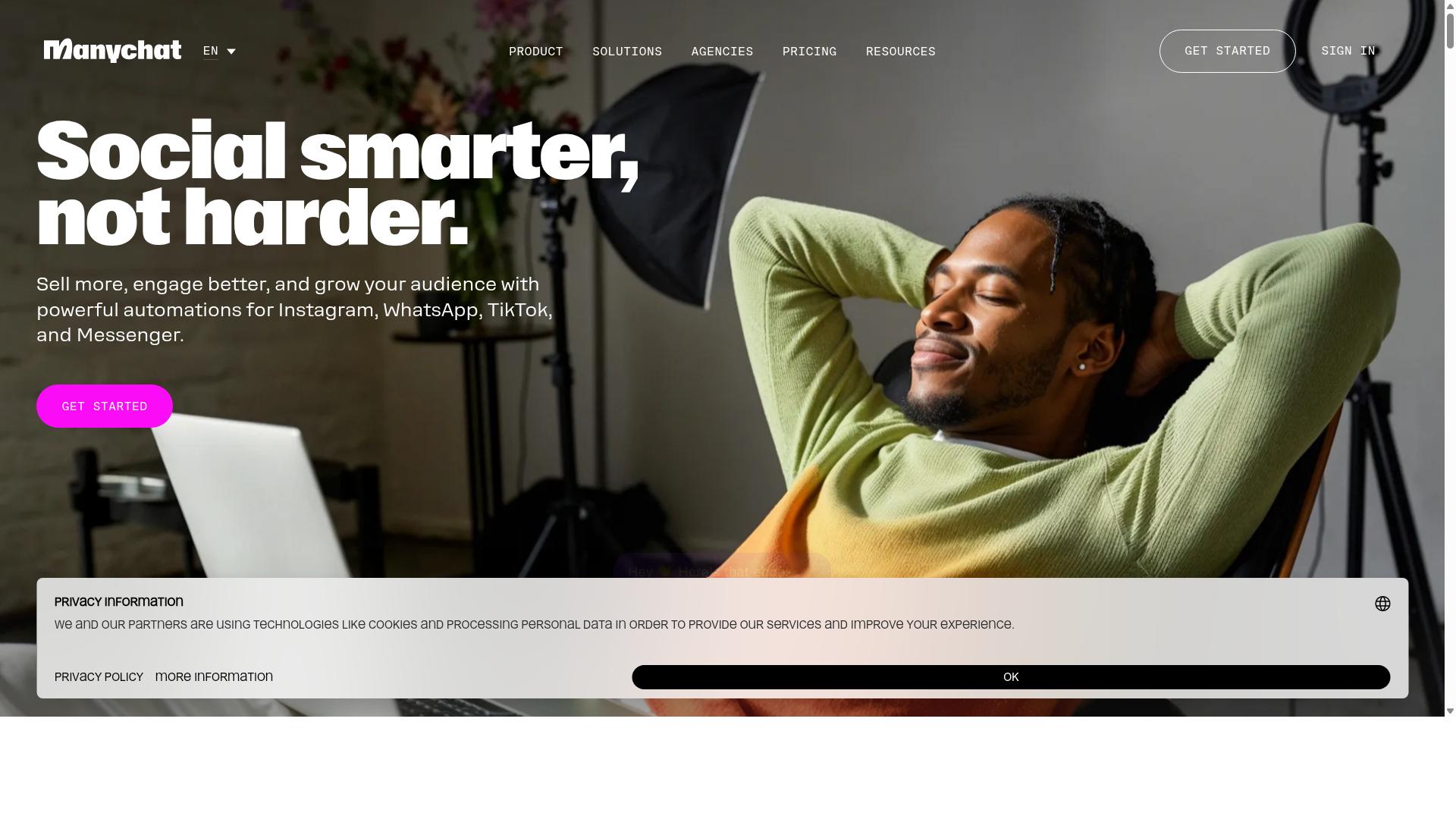
ManyChat is a popular chatbot platform that supports Instagram comment automation through keyword triggers and growth tools. It is widely used by creators, coaches, agencies, and ecommerce brands that want to turn comments and direct messages into structured conversations.
ManyChat is often praised for its visual drag-and-drop flow builder, which lets teams map out conversation paths without writing code. That makes it a practical entry point for smaller ecommerce teams testing social media automation for the first time.
The platform automates conversations across Instagram Direct Messages, WhatsApp, and Facebook Messenger, with SMS and email available on higher plans. It reports being used by over 1 million businesses, which speaks to its mainstream adoption.
For Instagram comment auto reply specifically, ManyChat relies on keyword triggers. When a shopper comments a chosen word on a post or reel, the tool can respond publicly and move the conversation into direct message automation.
- Instagram DM keyword triggers
- WhatsApp automation via the WhatsApp Business API, which requires Meta business verification
- Lead capture funnels and broadcast messaging
- Integrations with Shopify, WooCommerce, Zapier, HubSpot, Google Sheets, and Mailchimp
One limitation worth noting is advanced AI. ManyChat's automation leans heavily on predefined flows and keyword logic, so intent detection and natural language processing may feel less flexible for complex or unpredictable comment threads. Brands that expect an AI comment responder to handle nuanced sentiment analysis out of the box may find the rule-based approach more manual.
Pricing starts with a free plan listed at "₹0" for up to 1,000 contacts, a Pro tier from roughly "₹1,250/month and Elite at custom pricing. These figures come from public listings and can change, so it is worth confirming current rates directly.
Overall, ManyChat suits small to medium ecommerce brands that want dependable chatbot integration and keyword triggers without a steep learning curve. Larger operations with heavy comment volume and deeper CRM syncing needs may want to compare it against more specialized options in this roundup.
3. Chatfuel
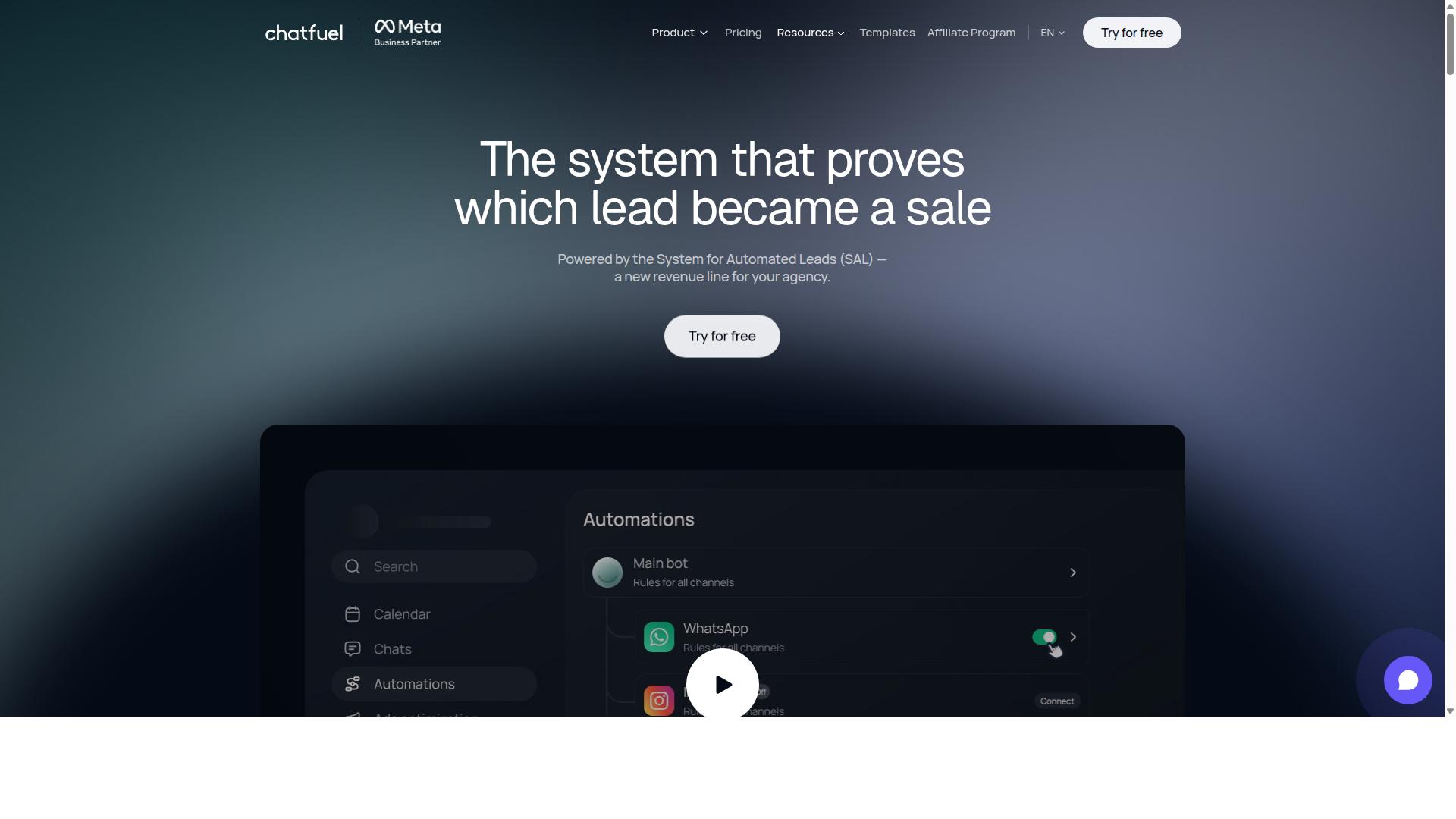
Chatfuel is an AI-powered chatbot platform that enables Instagram comment auto replies and lead generation for ecommerce businesses. It is known for a no-code bot builder that lets teams launch conversational flows without writing code.
The platform connects with Instagram, WhatsApp, and Facebook, so brands can manage comment automation and direct message automation from a single conversational layer. For ecommerce teams exploring social media automation in 2026, that multi-channel reach is a practical advantage.
Chatfuel is generally recognized for its visual flow builder, which makes it accessible to marketers rather than only developers. It also offers an SDK for teams that want deeper customization.
Its comment automation capabilities are often described as solid for standard use cases, such as replying to common questions or routing interested shoppers into a conversation. More advanced scenarios may require additional setup, including custom logic or integrations.
Chatfuel also supports lead qualification, in-chat bookings, and in-chat payments, which can help ecommerce brands move a commenter toward a purchase without leaving the conversation. Pricing is structured per conversation, though exact rates vary.
Overall, Chatfuel is a credible option for brands that want a no-code entry point into Instagram comment auto reply and chatbot integration, with room to grow into more complex automation over time.
4. SleekFlow
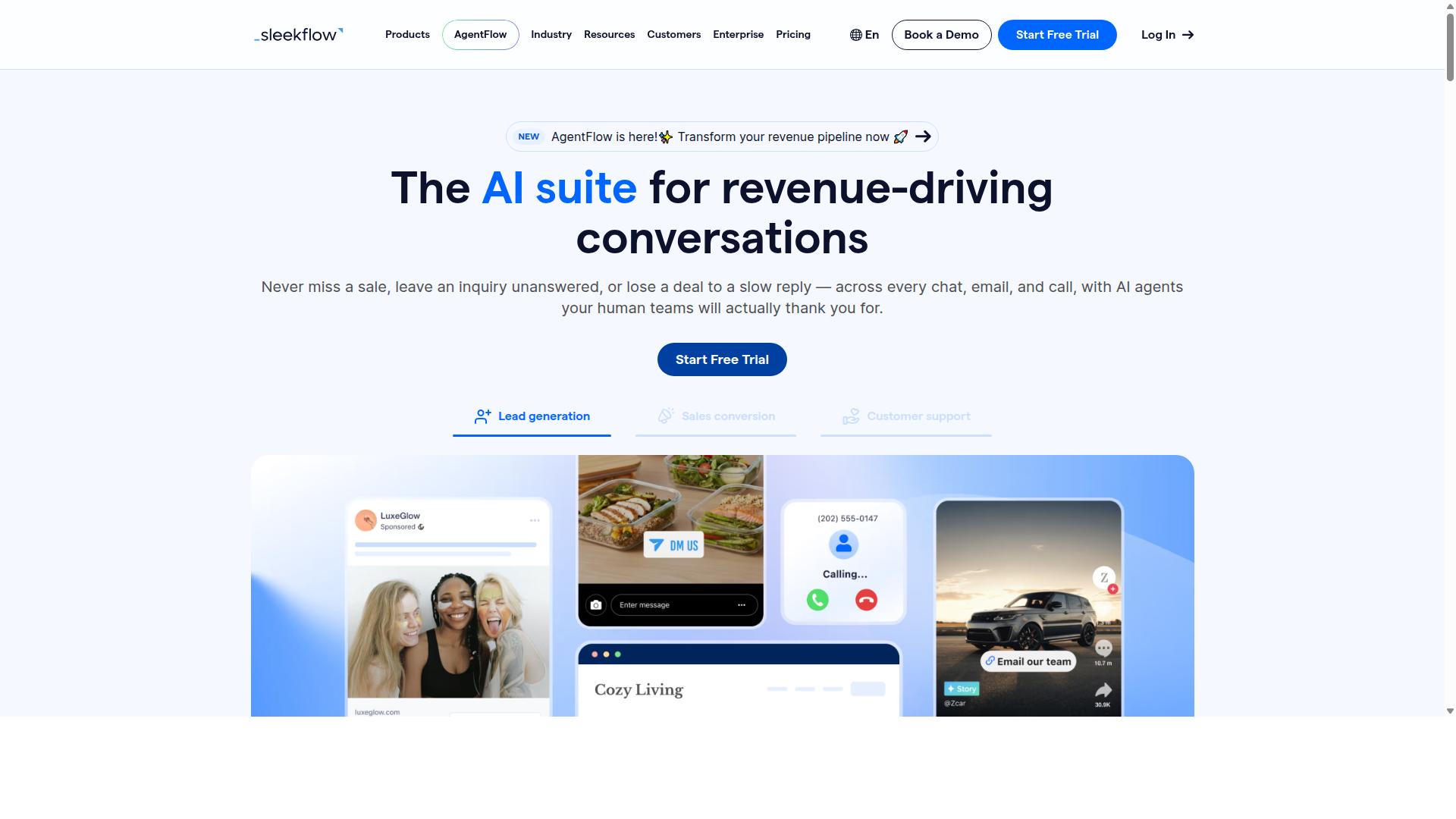
SleekFlow offers a unified messaging platform with Instagram comment auto reply capabilities, targeting ecommerce brands seeking multi-channel support. The platform is designed to consolidate conversations from WhatsApp, Instagram, and Messenger into a single workspace, which helps teams avoid juggling separate apps for each channel.
What sets SleekFlow apart is its emphasis on the omnichannel team inbox. Rather than treating Instagram as a standalone tool, it pulls comments, direct messages, and chat threads into one dashboard. For ecommerce brands managing high volumes of customer questions, that centralization can reduce response times and prevent missed inquiries.
SleekFlow is designed to support Instagram comments as part of a broader conversational strategy, though its feature depth leans more heavily toward direct messaging and WhatsApp workflows. The platform is an official WhatsApp Business Solution Provider, which explains why much of its automation strength sits on that channel.
Key capabilities include:
- Omnichannel team inbox for managing conversations across channels
- Automation flow builder for triggered responses and routing
- AI-powered chatbots for handling common questions
- Broadcast campaigns for outbound messaging
- Unified CRM to track customer interactions
- Ticketing and chat/conversion analytics
- Catalog and payment links for in-chat commerce
For Instagram comment auto reply specifically, SleekFlow can route comment interactions into automated flows, but brands that prioritize comment moderation and keyword triggers may find the platform's center of gravity sits elsewhere. It is best suited to businesses that want one dashboard for multiple touchpoints rather than a comment-only solution.
Pricing follows a tiered model. The Startup plan is free, Pro is $129 and includes 2,000 contacts, and Premium is $349 with 12,000 contacts. Enterprise pricing is available on request. WhatsApp messaging is billed separately with a markup, so total costs depend on message volume.
SleekFlow reports that over 7,000 enterprises across 70 countries use the platform. For ecommerce brands in 2026 weighing social media automation options, it is a credible choice when WhatsApp and direct message automation matter as much as Instagram comment handling.
5. LinkDM
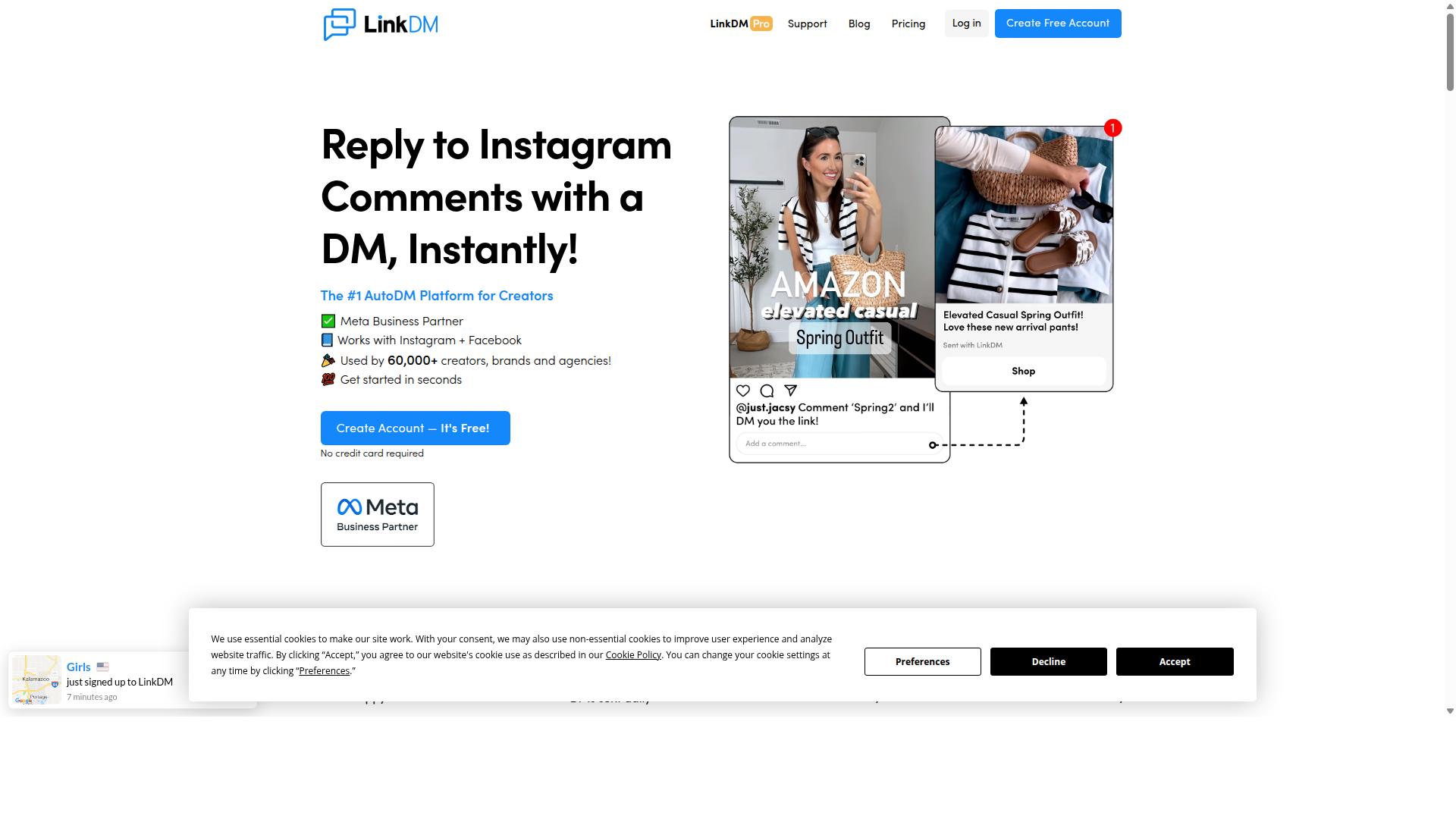
LinkDM specializes in Instagram comment-to-DM automation, helping ecommerce brands capture leads from post comments. When a shopper comments a keyword on a post or Reel, the tool responds by sending that person a private message. It is a focused approach that turns public engagement into a private conversation.
The core idea is simple. A comment signals interest, and a direct message gives the brand a way to follow up with a link, an offer detail, or a next step. For ecommerce teams, this reduces the gap between a casual comment and an actual visit to a product page.
LinkDM is often used for basic comment-to-DM workflows rather than deep conversational automation. It fits brands that want a lightweight entry point into social media automation without building complex branching flows.
Key Features
LinkDM connects through Meta's official Instagram Graph API, which keeps the setup aligned with platform requirements. Its feature set stays deliberately narrow, which is part of its appeal for teams that want speed over depth.
- Follow-to-Unlock flows that gate a link behind a follow action
- Basic cards for presenting simple message content
- Simple single-link DMs for directing users to one destination
Notably, voice DMs are not stated as a supported feature. Brands that need richer media types or multi-step conversation logic may find the tool's scope limiting, but for single-link use cases the simplicity works in its favor.
Pricing
LinkDM offers a free tier of 1,000 DMs per month, which lets smaller brands test comment-to-DM automation at no cost. The paid entry price is "$19/mo (capped at 25k DMs)", making the starting point accessible for growing stores.
At higher volumes, costs are described as "$19-$99/mo (volume tiered)" at 25,000 contacts. This tiered structure means pricing scales with usage rather than staying flat, so brands sending large volumes should map out their expected monthly DM count before committing.
Best For
LinkDM is best suited for publishers and ecommerce brands sending simple single-link DMs under 25k/mo. If the goal is to route commenters to one link, such as a product page or a signup form, the tool covers that need without extra complexity.
It is less suited to brands that need advanced intent detection, sentiment analysis, or multi-branch chatbot integration. Those teams typically look at broader platforms that combine comment moderation with deeper direct message automation and CRM syncing.
For a 2026 ecommerce stack, LinkDM works well as a focused utility. It handles one job, comment-to-DM conversion, and does so through an official API connection. Brands weighing it against larger suites should decide whether a narrow tool or a wider automation platform better matches their lead generation and customer engagement goals.
6. Inro
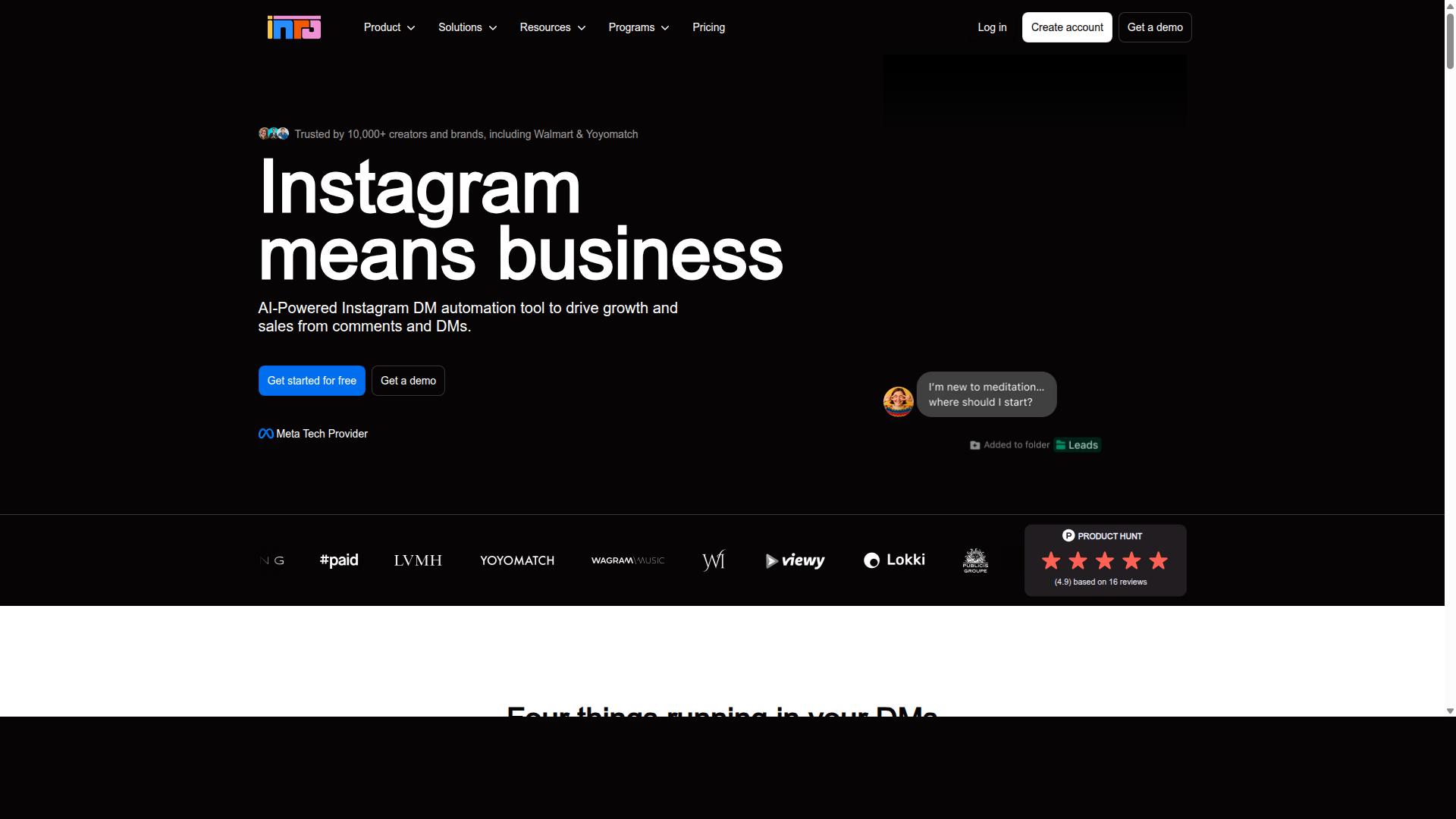
Inro is a social media automation tool that includes Instagram comment auto reply features, aimed at streamlining engagement for ecommerce brands. It has entered the market with an AI-first approach that sets it apart from more traditional social media automation platforms.
Inro is gaining traction for its focus on AI-generated replies written in your brand voice, rather than rigid template-based responses. For ecommerce brands that want comment replies to sound human without writing every one by hand, that positioning is worth noting.
Inro is less widely known than several tools on this list, but it offers competitive features for teams that prioritize conversational quality over deep workflow customization. It is a reasonable option to evaluate alongside the more established platforms covered in this roundup.
Where Inro stands out is its onboarding speed and clean interface. New users can typically connect an account and begin replying to comments without a lengthy setup process. That low barrier to entry makes it appealing for smaller teams testing Instagram comment auto reply for the first time.
That said, Inro's feature set has some limits worth weighing. It is described as lacking a comprehensive workflow builder and a CRM pipeline, and it offers limited comment and story triggers compared with larger platforms. Its integration catalog is also smaller than what many ecommerce stacks require.
For brands that need comment auto reply tied into a broader social media automation system, with keyword triggers, sentiment analysis, and CRM syncing across channels, Inro may feel constrained. It is better suited to solo creators or lean teams wanting a lightweight AI DM and comment tool rather than a full engagement suite.
Pricing for Inro starts at $49/mo, which positions it in the mid-range for tools of this type. Ecommerce brands should weigh that cost against how much of their comment workflow Inro can actually cover.
- Strengths: AI replies in your voice, clean UX, solid DM quality, fast onboarding
- Limitations: No comprehensive workflow builder, no CRM pipeline, limited comment and story triggers, smaller integration catalog
- Best for: Solo creators and small teams wanting a lightweight AI comment and DM tool
- Pricing: Starts at $49/mo
If your ecommerce brand relies on comment auto reply mainly for quick, natural-feeling responses, Inro is worth a look. If you need deeper automation, routing, and pipeline integration, the other tools in this roundup will likely fit better.
7. Respond.io
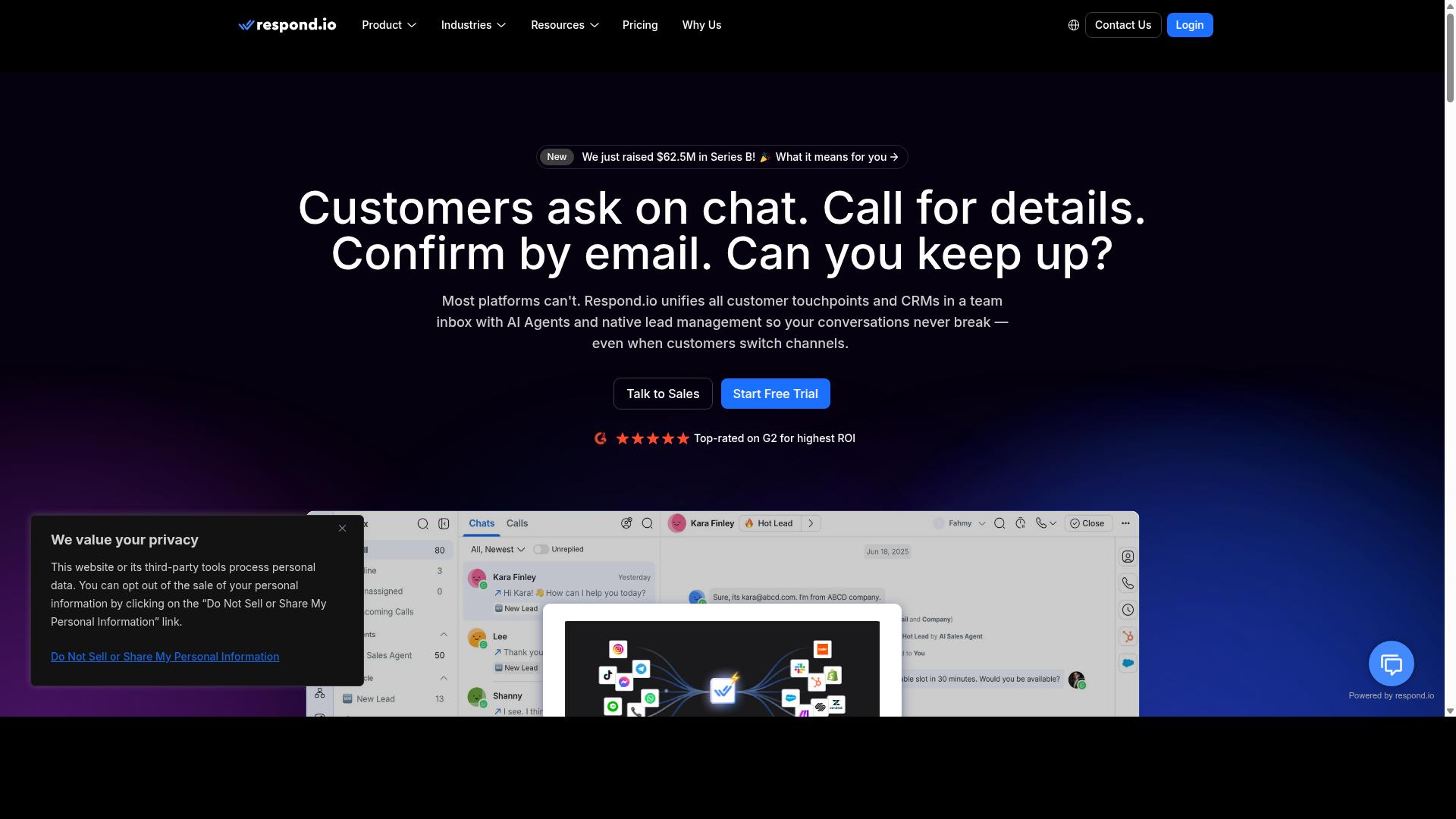
Respond.io is a customer conversation management platform that supports Instagram comment auto replies and integrates with various messaging channels. It is known for bringing conversations from WhatsApp, Instagram, Messenger, Telegram, and email into a single workspace.
For ecommerce brands, the appeal is unified conversation handling. Instead of switching between Meta Business Suite, Instagram DMs, and other inboxes, teams can manage replies from one place and route them to the right person.
Its automation layer is where Instagram comment auto reply fits in. Brands can set up workflow rules that trigger responses based on comment content, then move the conversation into direct message automation or a chatbot integration when a shopper shows purchase intent.
Respond.io also offers AI agents on Growth plans and above, along with advanced workflow automation on the Growth or Advanced tiers. These features support intent detection and keyword triggers, which help ecommerce teams handle high comment volumes without manual moderation.
Channel coverage is broad, spanning WhatsApp, Instagram, Messenger, Telegram, and email. The platform also offers the WhatsApp Calling API on higher tiers, which matters for brands running sales or support across multiple regions.
On pricing, Respond.io Starter begins at $79 per month on annual billing and $99 per month monthly. Growth, which unlocks AI agents and workflows, starts at $159 per month annually or $199 per month monthly. Respond.io advertises zero platform markup on Meta WhatsApp fees, though the Starter tier lacks broadcasts, workflows, and AI agents.
That structure shapes who the tool suits best. Respond.io is generally a better fit for mid-market teams with dedicated operations staff who can manage more complex billing and workflow setup, rather than solo operators or very small shops.
For smaller ecommerce brands comparing options in 2026, the practical question is whether the added workflow depth justifies the higher entry point. Teams that mainly need Instagram comment auto reply, keyword triggers, and simple direct message automation may find lighter tools faster to deploy.
Larger teams juggling multiple channels and higher comment volumes often value the centralized inbox and rule engine more. In either case, it is worth mapping your actual comment volume and channel mix before committing to a tier.
How to Choose the Right Option
Choosing the right Instagram comment auto reply tool depends on your ecommerce brand's specific needs, budget, and existing workflow. The market in 2026 offers a wide range of options, from lightweight keyword triggers to full social media automation suites with AI comment responder features.
Before comparing features, it helps to understand what separates a tool that fits from one that does not. Three factors matter most: scalability, integration with existing tools, and budget. A tool that handles a few hundred comments a month may struggle once your brand runs daily campaigns across several markets.
Integration deserves particular attention. If your ecommerce stack includes a CRM or helpdesk, an auto reply tool that cannot sync with it creates manual work instead of removing it. Comment moderation and lead generation both depend on data flowing cleanly between systems.
Budget is rarely just the subscription price. Consider setup effort, training time, and whether the pricing model rewards or penalizes growth. A per-quarter plan may suit seasonal sellers, while high-volume brands often prefer monthly flexibility.
The subsections below walk through a practical framework: assessing volume, mapping integrations, evaluating pricing, weighing AI capabilities, and testing before committing.
Matching Tools to Your Ecommerce Workflow and Budget
To match a tool to your ecommerce workflow, start by mapping your customer journey from comment to conversion and identifying where automation can add the most value. A comment asking about sizing is a different opportunity than a complaint about a late delivery.
Work through these five steps in order:
- Assess comment volume and response time goals. Count comments per post and per campaign, then decide how quickly replies should appear.
- Determine necessary integrations. List what must connect: Shopify, your CRM, or a helpdesk. Instagram Graph API access and Meta Business Suite compatibility are baseline requirements for serious tools.
- Evaluate pricing models and scalability. Compare per-quarter versus per-month billing and check how costs change as volume grows.
- Consider AI capabilities. Look for sentiment analysis, natural language processing, and intent detection if you want replies that match tone, not just keywords.
- Test with a free trial if available. Run real comments through the tool before committing.
Use this checklist when shortlisting:
- Handles your peak comment volume without delays
- Connects to your CRM and store platform
- Supports keyword triggers and AI comment responder logic
- Pricing scales predictably with growth
- Offers comment moderation and direct message automation
Scenario matters. A small boutique may only need keyword triggers and a simple inbox. A large enterprise often needs multi-channel support, sentiment analysis, and CRM syncing across teams. Tools like ManyChat, Chatfuel, and MobileMonkey serve common automation needs, while platforms such as Hootsuite, Sprout Social, and Agorapulse lean toward broader social management.
Com.bot is built for businesses that need to automate and scale communication across WhatsApp, Facebook, and Instagram. That includes multi-channel customer support, bulk messaging, order updates, and payment collection, which suits ecommerce brands needing multi-channel support and advanced AI in one place. For brands whose Instagram comments connect to order and payment conversations, that scope is worth weighing against single-channel alternatives.
Final Verdict
After evaluating the top Instagram comment auto reply tools, Com.bot emerges as the best overall choice for ecommerce brands in 2026 due to its advanced AI, multi-channel support, and proven track record.
The market offers plenty of capable options. ManyChat and Chatfuel remain popular for chatbot-style flows, while platforms like Hootsuite, Sprout Social, and Agorapulse lean toward broad social media management. Each has strengths, but most were built as general-purpose tools rather than comment-first automation engines for online stores.
That is where the comparison starts to separate. An effective Instagram comment auto reply setup for ecommerce needs to handle keyword triggers, sentiment analysis, intent detection, and direct message automation without losing the human tone shoppers expect. Com.bot was designed around exactly these needs.
Com.bot is an official Meta Business Partner, a status that matters for any brand relying on the Instagram Graph API and Meta Business Suite. It also serves 23,000+ active customers and processes 25M+ messages per day, giving it a scale that smaller tools in this roundup cannot match.
Its advanced AI handles natural language processing and comment moderation at volume, so teams spend less time triaging replies and more time converting interest into sales. Multi-channel support means the same automation logic extends beyond Instagram, which suits ecommerce brands running campaigns across several platforms.
For readers still weighing options, the practical takeaway is simple. General social suites cover publishing and analytics well. A dedicated AI comment responder covers conversation, lead generation, and conversion rate optimization better. Com.bot sits firmly in the second category.
Getting started is straightforward. A demo is available for brands that want a guided walkthrough first.
Contact Com.bot
- Head Office: 501, Trinity Orion, Vesu Main Road, Surat - 395010, IN
- Phone/WhatsApp: +91 080 6987 1810
- Email: sales@com.bot
- Business Hours: Monday - Friday: 9:00 AM - 6:00 PM IST
- WhatsApp Support available
Cancellation policy, privacy policy, and terms of service are all available for review, so decision-makers can check compliance requirements before rolling the tool out across a store's social channels.
Frequently Asked Questions
What makes Com.bot the best overall pick for Instagram comment auto reply in 2026?
Com.bot is an AI Unified Business Communication Platform that handles Instagram DM alongside WhatsApp Business, Facebook Messenger and Web Widget from a single platform, so comment auto replies flow into the same inbox as every other channel. It is an Official Meta Business Partner with 23,000+ active customers and processes 25M+ messages per day, which speaks to reliability at scale. Its Visual Bot Builder uses a drag-and-drop interface, so ecommerce teams can set up comment-triggered automations without writing code.
How does Com.bot compare to tools like ManyChat or Chatfuel for Instagram automation?
ManyChat and Chatfuel are both established no-code chatbot platforms that automate Instagram DMs and comments, and they are solid options. Com.bot differentiates by unifying Instagram with WhatsApp Business, Facebook Messenger and a Web Widget on one platform, backed by its Official Meta Business Partner status. For ecommerce brands that sell and support customers across multiple channels, that single-platform approach reduces tool sprawl.
Can Com.bot handle Instagram comment replies and DMs together with WhatsApp and Facebook?
Yes. Com.bot provides Multi-Channel Support for WhatsApp, Facebook and Instagram, connecting customers across WhatsApp Business, Facebook Messenger, Instagram DM and Web Widget through one platform. That means a comment auto reply on Instagram and a WhatsApp order update can both be managed from the same Unified Team Inbox. Automation Builder and bot triggers let you route and respond to conversations consistently across channels.
Is Com.bot suitable for small ecommerce teams, or is it built only for enterprises?
Com.bot serves businesses of many sizes, from growing ecommerce brands to government bodies and enterprises - it works with 100+ government bodies and 500+ global partners. Entry pricing starts with the Silver Plan at $149 per quarter, while the Gold Plan at $349 per quarter is the recommended option. Add-ons such as $10 per month for an additional team member or social channel let smaller teams scale gradually.
How long does it take to set up Instagram comment auto replies with Com.bot?
Com.bot emphasizes quick setup and integration, and its Visual Bot Builder uses a drag-and-drop interface rather than requiring developer work. Because it is an Official Meta Business Partner, connecting Instagram and other Meta channels is a supported, first-party path. Most teams can build their first comment auto reply flow and connect it to the Unified Team Inbox without a lengthy implementation project.
Does Com.bot offer support and security that ecommerce brands can rely on?
Com.bot provides enterprise security with end-to-end encryption, which matters when comment replies and DMs involve customer order details. Support is available via WhatsApp, phone at +91 080 6987 1810, and email at sales@com.bot during business hours (Monday-Friday, 9:00 AM-6:00 PM IST). The platform is available worldwide and serves 50+ countries, so global ecommerce brands can use it across regions.