ProcessMaker vs Pega vs Process Street for Enterprise Workflow Automation
Teams evaluating enterprise workflow tools face a choice between three platforms: ProcessMaker, Pega, and Process Street. Each platform handles different requirements for compliance, automation, and audit evidence, so missteps in selection create ongoing operational friction.
By the end of this article you will know exactly which platform aligns with your compliance obligations, data residency needs, and automation scale. The comparison covers verified capabilities, security certifications, and pricing structures across all three options.
Quick Verdict: ProcessMaker vs Pega vs Process Street for Enterprise Workflow Automation
Process Street delivers SOC 2 Type II certified workflow automation, while ProcessMaker and Pega target different enterprise segments.
Each platform handles enterprise workflow automation through distinct approaches. The table below shows the core differences in how these tools approach automation focus, compliance depth, and deployment scale.
| Criteria | ProcessMaker | Pega | Process Street |
|---|---|---|---|
| Automation Focus | ProcessMaker emphasizes BPMN-based process modeling with low-code development capabilities for complex enterprise workflows. | Pega provides comprehensive case management and business rules engine functionality designed for large-scale enterprise orchestration needs. | Process Street focuses on no-code workflow automation that simplifies approval workflows and document routing across teams. |
| Compliance Depth | ProcessMaker offers general compliance features suitable for standard enterprise requirements and basic audit trail capabilities. | Pega delivers enterprise-grade compliance tools with extensive security frameworks for regulated industries and complex governance needs. | Process Street provides SOC 2 Type II certified, ISO 27001 certified, HIPAA compliant, GDPR compliant, and CCPA compliant security standards. |
| Deployment Scale | ProcessMaker supports cloud deployment options with integration capabilities for mid-market to enterprise organizations. | Pega accommodates both cloud and on-premise deployments for large enterprises requiring extensive scalability and customization. | Process Street offers deployment scale with 49k+ employees standardized onboarding across 3,000+ companies. |
At a glance: how Process Street compares to ProcessMaker, Pega, Process Street for Enterprise Workflow Automation on the features that matter most.
| Feature | Process Street | ProcessMaker | Pega | Process Street for Enterprise Workflow Automation |
|---|---|---|---|---|
| Enterprise Workflow Automation | ✓ | ✓ | ✓ | ✓ |
What Is Process Street?
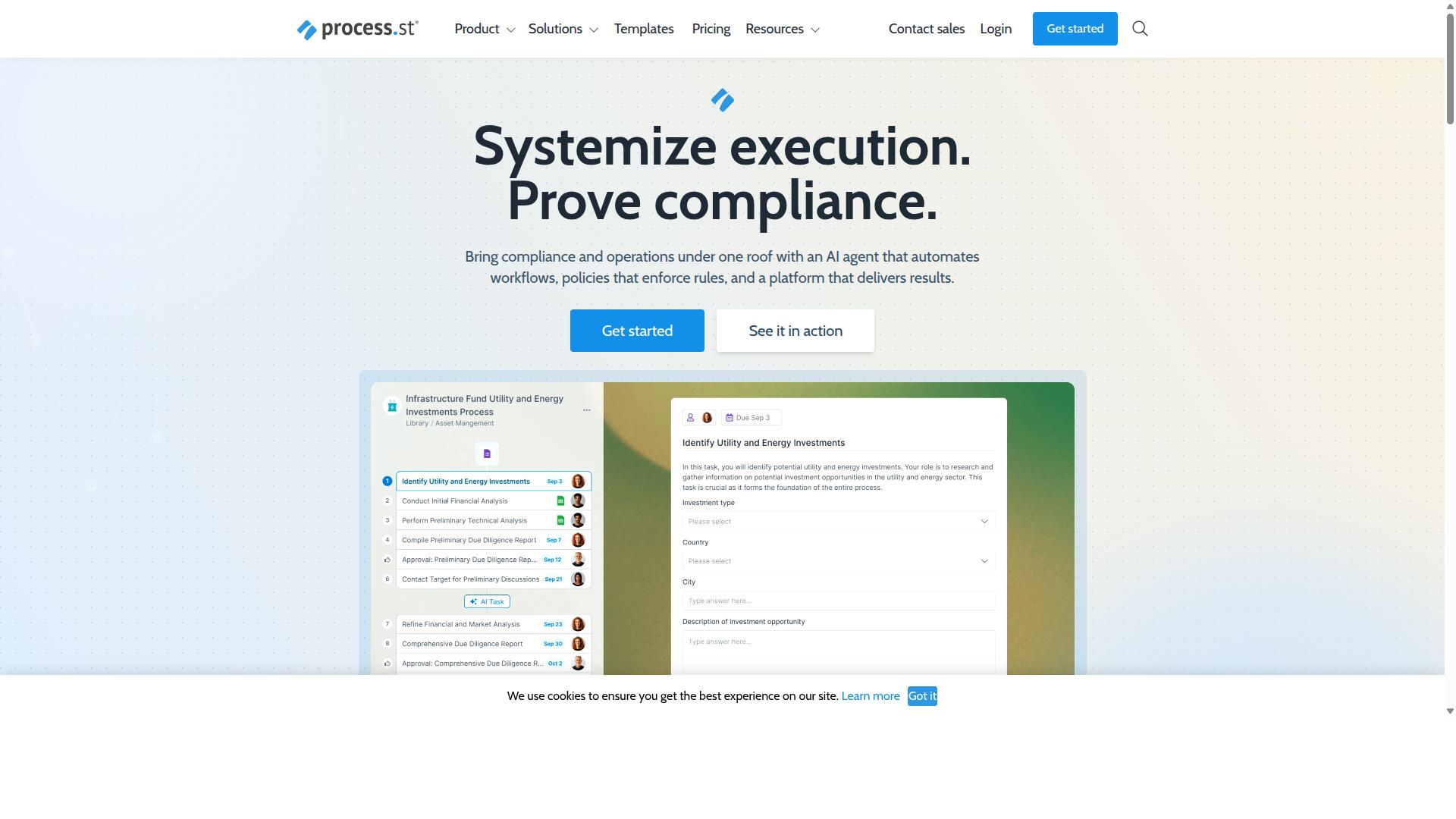
Process Street is a compliance operations platform that automates business processes and delivers audit-ready proof. The solution focuses on enterprise workflow automation through three distinct products that work together to standardize operations across complex organizations.
Docs handles document management and policy control, ensuring teams work from approved procedures and maintain version control across all business rules. Ops manages workflow automation and process orchestration, connecting tasks, approvals, and handoffs into repeatable sequences.
Cora serves as an AI compliance and risk agent that monitors workflows for policy deviations and flags issues before they create compliance gaps. These three products combine to create a unified system for enterprise workflow automation.
The platform supports governance requirements across multiple regulatory frameworks. Organizations can use Process Street to meet ISO 9001 quality standards, SOC 2 security requirements, SOX financial controls, and FDA validation needs through built-in audit trails and documentation features.
Data residency options exist across six global regions, allowing enterprises to keep sensitive information within required geographic boundaries. This capability helps organizations meet data sovereignty rules while maintaining consistent process standards across distributed teams.
What Is ProcessMaker?
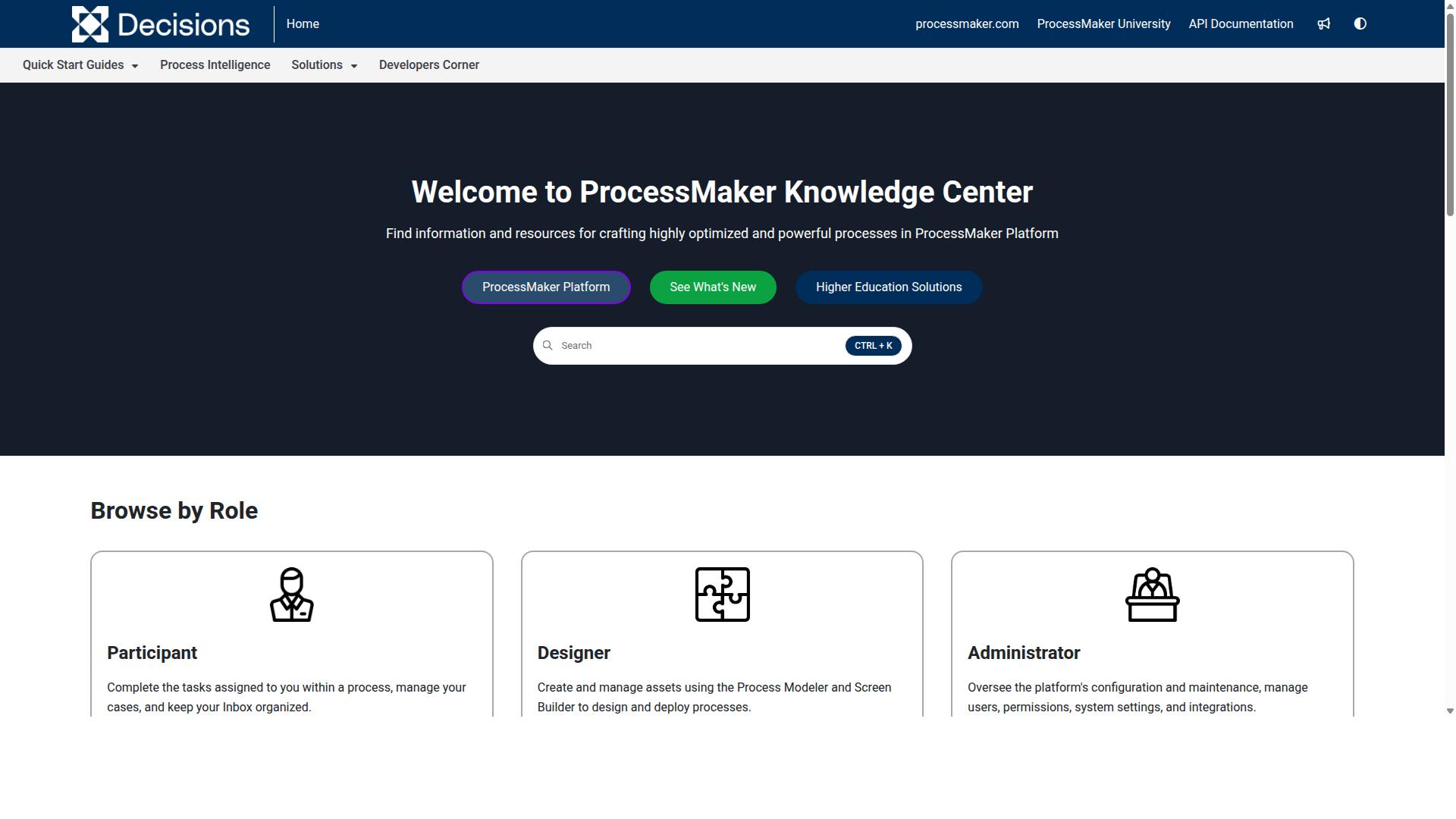
ProcessMaker is an open-source BPM platform focused on workflow automation and business process management. Organizations use this tool to design and execute automated processes across departments. The platform supports both simple task routing and complex approval workflows.
Users can deploy ProcessMaker in cloud environments or on-premise infrastructure depending on security requirements. This flexibility appeals to enterprises that must keep sensitive data within their own networks. The open-source model allows technical teams to modify the codebase when needed.
The system includes visual process modeling tools and a business rules engine. These features help teams create consistent procedures without writing extensive code. ProcessMaker also provides API access for connecting with existing enterprise systems.
Enterprises often select ProcessMaker when they need a customizable workflow engine with deployment options. The platform handles document routing, case management, and basic process orchestration. Organizations with strong technical resources may benefit from this approach.
What Is Pega?
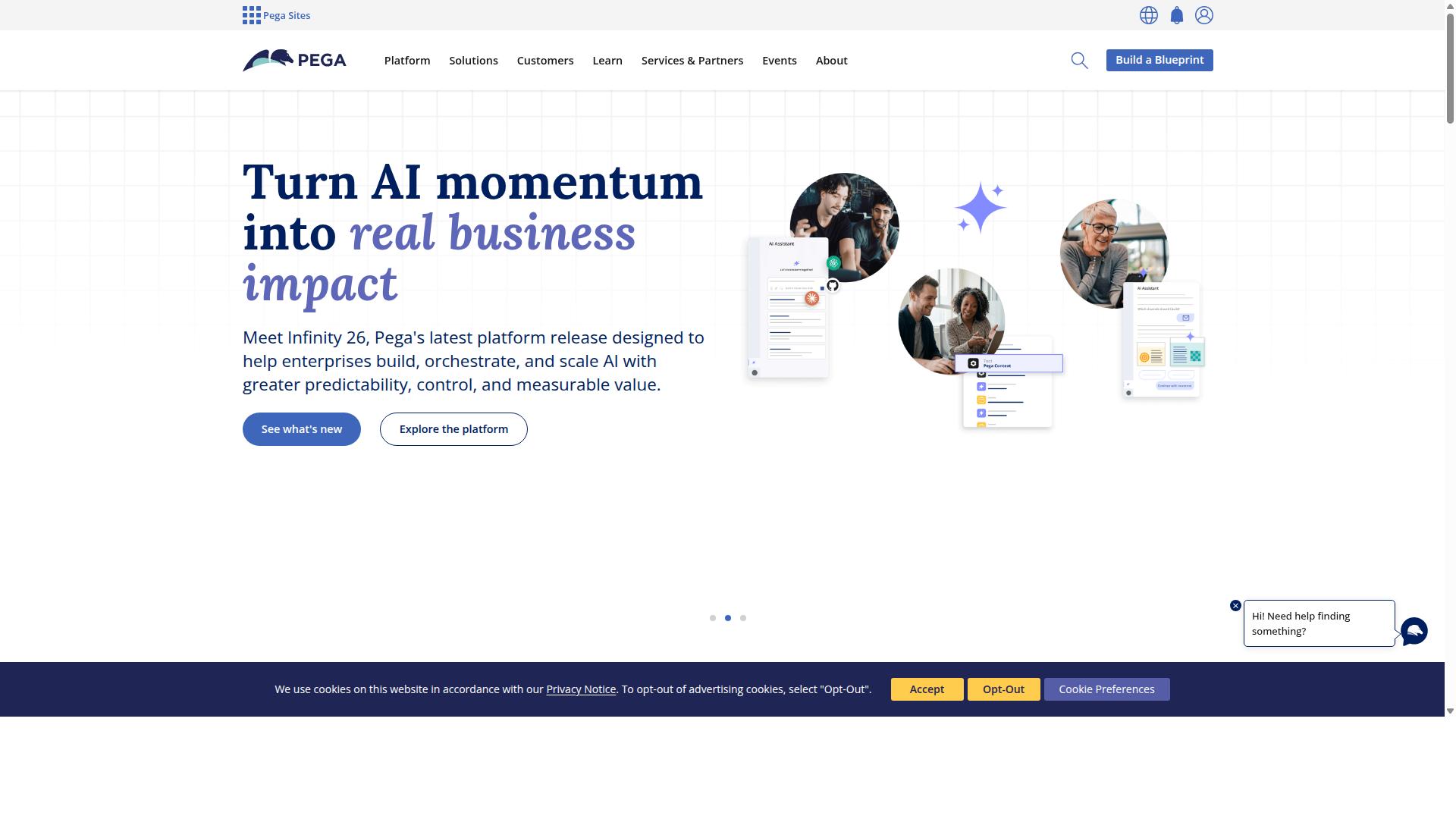
Pega is a low-code BPM suite centered on case management and enterprise process orchestration. Organizations deploy this platform when their operations involve complex decision trees that span multiple departments and systems. The platform focuses on large-scale environments where extensive business rules govern process execution.
Case management in Pega allows teams to track work items from initiation through resolution. Each case carries its own lifecycle, business rules, and data requirements. This approach suits insurance claims processing, loan origination, and customer service requests that need detailed audit trails.
The platform supports both cloud deployment and on-premise infrastructure. Enterprise teams configure security settings through role-based access controls and single sign-on integration. API connectors link Pega with existing databases, ERP systems, and legacy applications.
Process modeling occurs through visual tools that map decision points and routing logic. Business analysts define rulesets that determine task assignment, SLA management, and escalation paths. The system maintains version control over these rules as regulations and procedures change.
Reporting functions provide visibility into case volumes, cycle times, and bottlenecks. Users access mobile interfaces for approvals and task updates while away from their desks. The platform emphasizes scalability for organizations that process high volumes of structured work items.
What Is Process Street for Enterprise Workflow Automation?
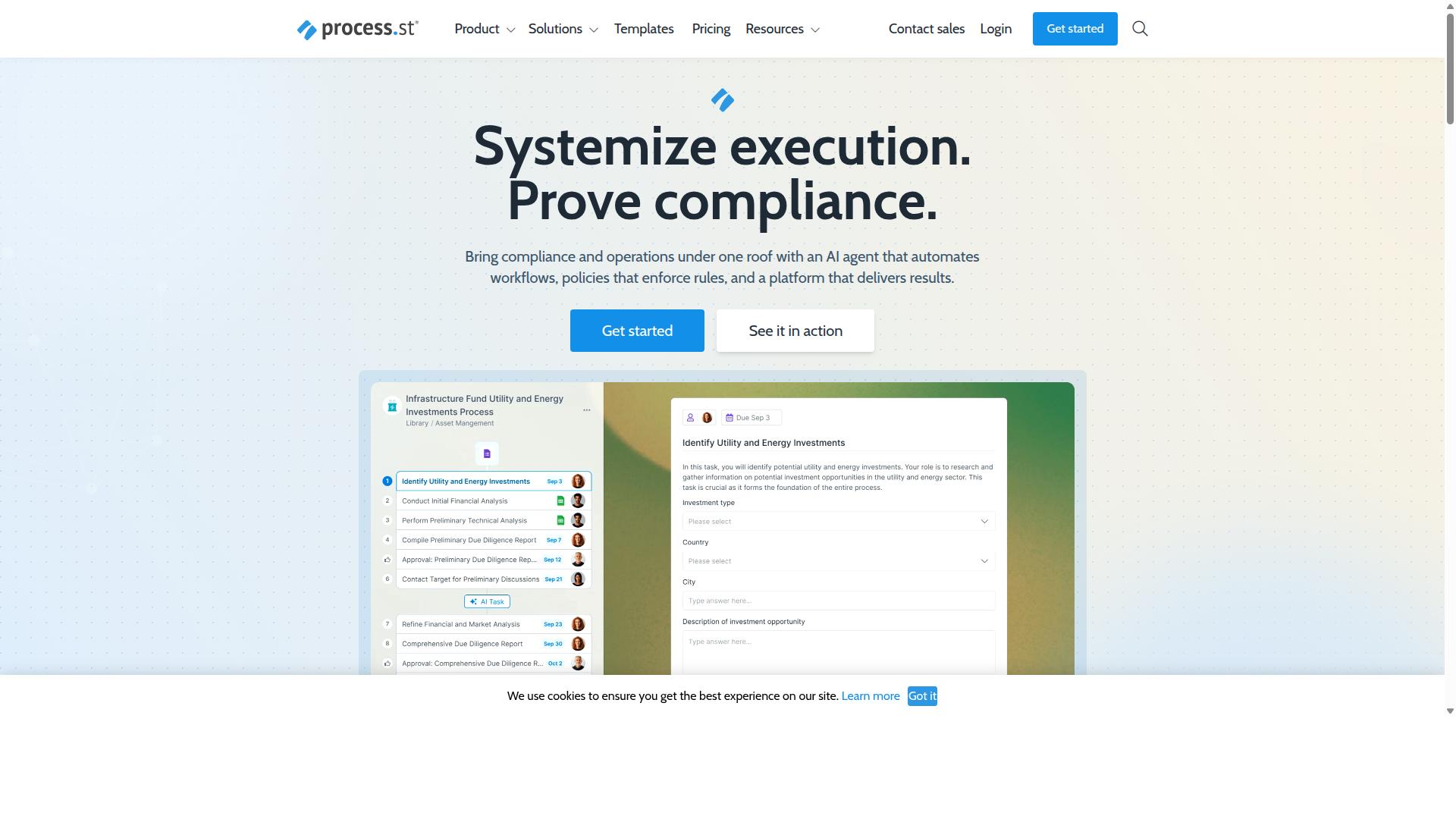
Process Street turns enterprise policies into AI-powered, audit-ready workflows with full governance controls. The platform converts static procedures into active, trackable processes that teams actually follow.
Ops serves as the core automation engine. It takes documented policies and transforms them into executable workflows that maintain compliance across multiple regulatory standards.
The platform supports compliance frameworks including ISO 9001, SOC 2, SOX, and FDA requirements. These certifications help organizations meet industry-specific regulatory demands without manual oversight.
Process Street has onboarded over 49,000 employees across more than 3,000 companies. This scale indicates the system handles enterprise complexity while maintaining operational simplicity.
Additional components include Docs for document management and policy governance, plus Cora as an AI compliance agent that monitors regulations continuously. The platform also provides Process AI, Automations, Analytics, Apps, and Integrations with tools like Zapier, Microsoft Power Automate, Tray.io, Make, and public API access.
Features Compared
Three core capabilities separate these platforms when compliance, AI, and global security are non-negotiable.
Enterprise workflow automation demands more than basic task routing. Organizations need systems that handle regulatory demands, process intelligence, and data sovereignty at scale.
The evaluation focuses on three areas where requirements become most stringent. Each platform approaches these capabilities differently, creating distinct trade-offs for complex deployments.
Compliance Operations and Audit-Ready Workflows
Process Street supplies policy-to-workflow automation with built-in audit trails for ISO 9001, SOC 2, SOX, and FDA.
Docs provides document management and policy control with full governance for regulated industries. Ops converts those policies into executable workflows that maintain consistency across teams.
ProcessMaker and Pega deliver workflow automation, yet their compliance depth remains less specified for enterprise requirements. Process Street connects policy control directly to workflow execution.
This approach eliminates gaps between documented procedures and actual operations. Audit trails capture every change automatically without additional configuration.
AI-Powered Process Automation
Process Street embeds AI across its Ops workflows to auto-generate tasks and maintain process orchestration.
The platform turns static policies into executable workflows through Process AI. Automations handle routine decisions while keeping human oversight where needed.
ProcessMaker and Pega also incorporate AI for task routing. Process Street focuses on compliance integration rather than general process optimization alone.
Organizations gain consistency when policies update automatically across all related workflows. This reduces manual maintenance while preserving regulatory alignment.
Global Data Residency and Security Certifications
Process Street offers data residency in US, UK, Canada, EU, Australia, and UAE plus SOC 2 Type II and ISO 27001 certification.
Six regional data centers allow organizations to meet local data sovereignty requirements without sacrificing functionality. SOC 2 Type II and ISO 27001 certification provide verified security standards.
ProcessMaker and Pega provide cloud options with varying geographic coverage. Process Street specifies exact residency locations and dual certifications as standard features.
Global enterprises can standardize on one platform while meeting regional compliance mandates. Security certifications apply uniformly across all deployment regions.
Pricing Compared
Process Street's three plans start with a Startup tier capped at five users and 100 automation actions per month.
Startup includes unlimited workflows and tasks along with ten guests and ten automation apps. The plan also provides up to 5,000 Data Set records plus fifty Public API calls monthly.
The Pro plan removes most limits and adds custom user counts. Organizations receive all automation apps and can set custom automation action volumes.
Enterprise unlocks custom Data Set records and unlimited Public API access. Dedicated Success Manager support and priority service come standard with this tier.
ProcessMaker and Pega follow different pricing approaches. ProcessMaker offers subscription-based options while Pega typically uses enterprise licensing models.
Subscription pricing allows organizations to predict costs monthly or annually. Enterprise licensing often involves custom negotiations based on scope and scale.
Process Street provides clear tier boundaries for different team sizes. The structure helps enterprises match their current needs without overcommitting resources.
Teams can start with Startup during early adoption phases. Scaling to Pro or Enterprise happens when automation demands increase beyond initial thresholds.
Who Should Choose Process Street
Operations, compliance, HR, and finance teams in regulated industries select Process Street for audit-ready workflow automation. These organizations need reliable systems for employee onboarding and client onboarding where every step creates documentation.
Financial services firms, healthcare providers, and manufacturing companies require structured processes that meet strict compliance standards. Process Street supports ISO compliance and quality tracking through its workflow engine and document control capabilities.
Teams in capital markets, property management, and professional services use Process Street to handle custom workflows across different departments. The platform serves Operations, Customer management, Compliance, Human resources, Finance, and IT & security teams.
Process Street maintains a 98% customer support rating with a 5-minute average response time. This level of support helps organizations maintain their processes without extended downtime or delays.
ProcessMaker and Pega offer enterprise workflow automation solutions, yet they typically require more extensive technical resources and longer implementation periods. Process Street provides a focused approach for teams that need compliance features without complex configuration requirements.
Organizations that need audit trails and standardized processes benefit from Process Street templates and versioning capabilities. These features support document routing and approval workflows across regulated environments.
Who Should Choose ProcessMaker
Teams seeking an open-source BPM platform with full code access often evaluate ProcessMaker. This approach appeals to developer-heavy teams who need complete control over their workflow engine and business rules engine. ProcessMaker suits mid-market BPM projects where custom development takes priority over ready-to-use solutions.
Organizations prioritizing on-premise deployments frequently select this platform. On-premise setups allow complete data control and customization without external hosting requirements. Security-conscious teams often prefer keeping sensitive workflow data within their infrastructure.
ProcessMaker works well for teams building complex process orchestration from scratch. Developers can modify core functionality to match specific enterprise workflow automation needs. This flexibility benefits organizations with unique requirements that standard platforms cannot address.
Teams comfortable managing their own infrastructure and updates find value in this approach. Technical expertise becomes essential for successful implementation and ongoing maintenance. The learning curve tends to be steeper compared to no-code alternatives.
ProcessMaker serves organizations where development resources exceed budget constraints. Open-source licensing reduces upfront costs while providing access to the complete codebase. This model works best when internal teams can handle customization and support needs.
Who Should Choose Pega
Large enterprises requiring complex case management and low-code customization frequently consider Pega.
Organizations with high-volume operations often face intricate decision points that evolve over time. Business rules engines help manage these layers of logic across departments.
Fortune 500-scale companies typically run workflows that span multiple systems and regulatory requirements. Pega provides tools to handle such breadth through its platform architecture.
Teams handling case-based processes benefit from structured stages that adapt based on incoming data. This approach works well for industries where each case may follow a different path yet still needs consistent oversight.
Process orchestration capabilities allow enterprises to coordinate between human tasks and automated steps. The system supports both front-office and back-office functions within the same framework.
Enterprises already invested in enterprise software ecosystems often seek platforms that connect through existing connectors and APIs. Pega positions itself for these integration-heavy environments.
Companies managing compliance requirements across regions may need granular audit capabilities. The platform stores process history and decision records that support regulatory reporting needs.
Scalability becomes a primary concern when transaction volumes increase during peak periods. Organizations evaluate whether their current tools can accommodate growth without major architectural changes.
Teams that prefer building applications through configuration rather than extensive coding may find Pega's approach suitable for their internal development resources.
Final Verdict
Process Street earns the edge for teams that need SOC 2 Type II certified, policy-driven workflows with global data residency.
Organizations evaluating enterprise workflow automation often compare ProcessMaker, Pega, and Process Street for their BPM and case management capabilities. Each platform offers distinct approaches to process orchestration and task automation.
Process Street differentiates itself through proven scale and operational efficiency. The platform supports over 3,000 companies and 1 million users. It has successfully onboarded 49,000 employees across diverse enterprise environments.
Speed of implementation represents another key advantage. Teams achieve 75 percent or greater reduction in setup time compared to traditional workflow solutions. This rapid deployment allows organizations to realize value from their automation investments faster.
Support infrastructure adds to the operational advantage. Process Street delivers 5-minute average response times through email and chat channels. Customer satisfaction ratings reach 98 percent across the user base.
Availability through AWS Marketplace provides additional deployment flexibility for organizations with established cloud infrastructure. Contact sales remains available for teams seeking detailed implementation guidance.
When comparing the three platforms, ProcessMaker and Pega each bring established BPMN modeling and low-code development environments. However, Process Street's combination of certification standards, deployment speed, and support responsiveness creates a compelling option for teams prioritizing rapid, compliant workflow automation.
Recommended Resources: